Dr. Karan Kukreja

About

Expertise

Procedure

reviews

Why Us

FAQs

Contact Us
Ilizarov / Limb Reconstruction

Ilizarov / Limb Reconstruction

Ilizarov / Limb Reconstruction

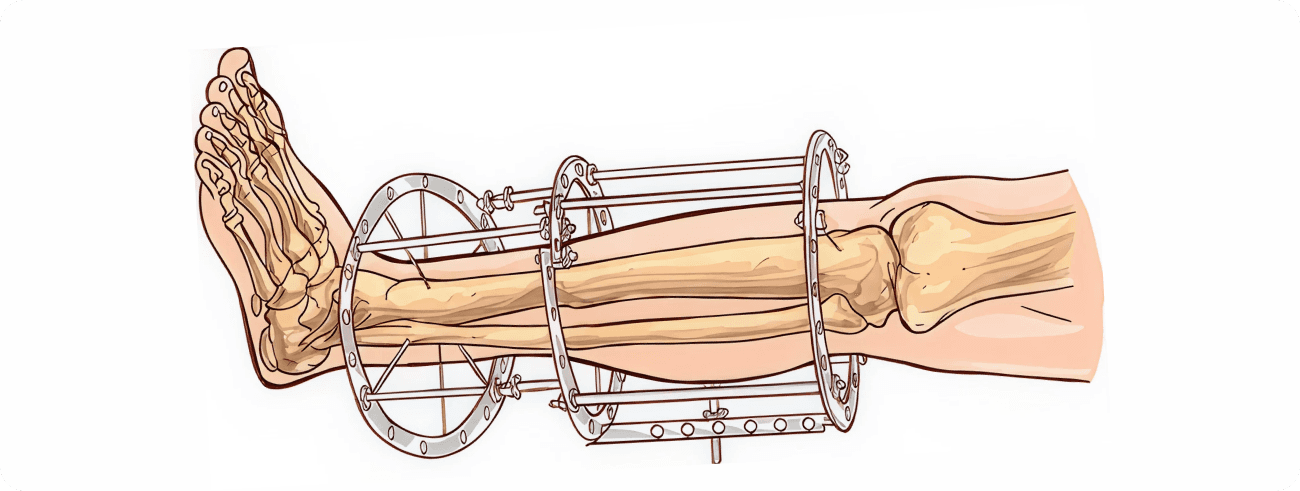
The Ilizarov technique is a specialized external fixation method that uses a circular frame and tensioned wires to treat complex bone problems. It helps in fracture healing, deformity correction, limb lengthening, and managing infected or non-healed fractures

often without the need for large open surgeries.

The Ilizarov technique is a specialized external fixation method that uses a circular frame and tensioned wires to treat complex bone problems. It helps in fracture healing, deformity correction, limb lengthening, and managing infected or non-healed fractures

often without the need for large open surgeries.

The Ilizarov technique is a specialized external fixation method that uses a circular frame and tensioned wires to treat complex bone problems. It helps in fracture healing, deformity correction, limb lengthening, and managing infected or non-healed fractures

often without the need for large open surgeries.

Indications/ Conditions we treat

Indications/ Conditions we treat

Infected non-unions and bone loss after trauma or surgery

Congenital deformities

Severe limb injuries with soft-tissue compromise

Angular or rotational deformities of long bones

Complex fractures not amenable to be managed with conventional methods

Limb length discrepancies

Short stature

Procedures we perform

Procedures we perform

Non-union / malunion fracture correction

Bone transport for bone loss or defects

Deformity correction (bow legs, knock knees, various other simple and complex deformities)

Computer assisted six-axis deformity corrections

Trauma reconstruction after severe accidents

Congenital limb deformity correction

Limb lengthening (short stature, post-traumatic, congenital)

What to expect

What to expect

Application: Frame applied in the operating room under anaesthesia.

Adjustment phase: Gradual daily adjustments to correct deformity or lengthen bone- is done as needed. Serial x rays confirm progress.

Consolidation phase: Frame holds bone steady while new bone hardens and/or the fracture heals.

Removal: Done as a day-care procedure; usually, a plaster is used for a short period after.

Quick highlights

Quick highlights

Allows bone regeneration without further surgical trauma in many cases

Helps save limbs that might otherwise need amputation

Enables early mobilization and physiotherapy

Widely used worldwide for complex trauma and deformity correction

Queries

Queries

Queries

Frequently Asked Questions

What exactly is an Ilizarov frame?

It’s a circular metal frame external to the limb, fixed to bone with thin wires and pins. The frame can be designed and assembled to achieve various purposes. We can manipulate the frame post-surgery for gradual correction of severe deformities or to achieve new bone growth.

How long do I need to wear it?
Is it very painful?
Can I walk with the frame?
Will the scars be permanent?
What about daily activities?
Are there risks?
What exactly is an Ilizarov frame?

It’s a circular metal frame external to the limb, fixed to bone with thin wires and pins. The frame can be designed and assembled to achieve various purposes. We can manipulate the frame post-surgery for gradual correction of severe deformities or to achieve new bone growth.

How long do I need to wear it?
Is it very painful?
Can I walk with the frame?
Will the scars be permanent?
What about daily activities?
Are there risks?
What exactly is an Ilizarov frame?

It’s a circular metal frame external to the limb, fixed to bone with thin wires and pins. The frame can be designed and assembled to achieve various purposes. We can manipulate the frame post-surgery for gradual correction of severe deformities or to achieve new bone growth.

How long do I need to wear it?
Is it very painful?
Can I walk with the frame?
Will the scars be permanent?
What about daily activities?
Are there risks?

Case Studies

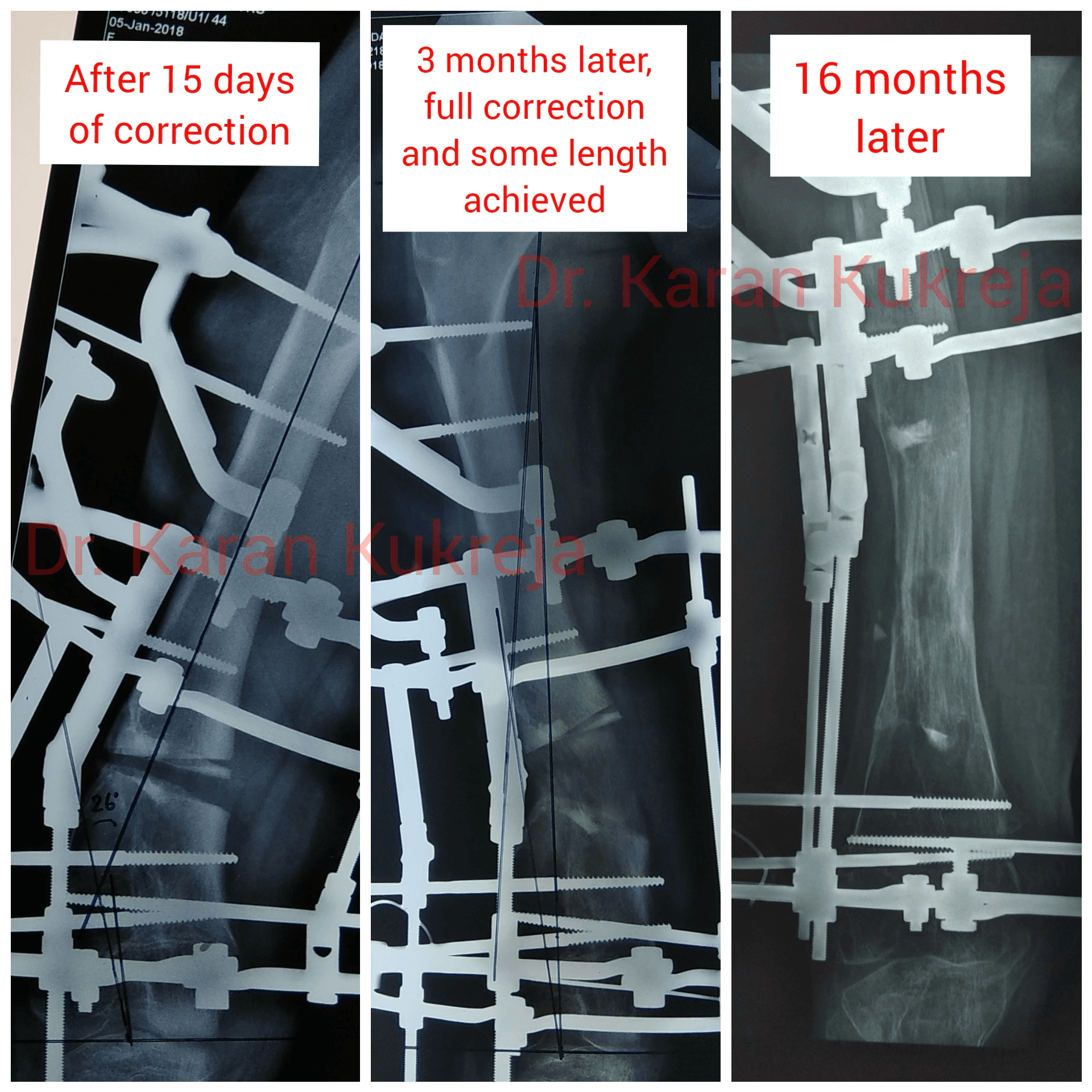
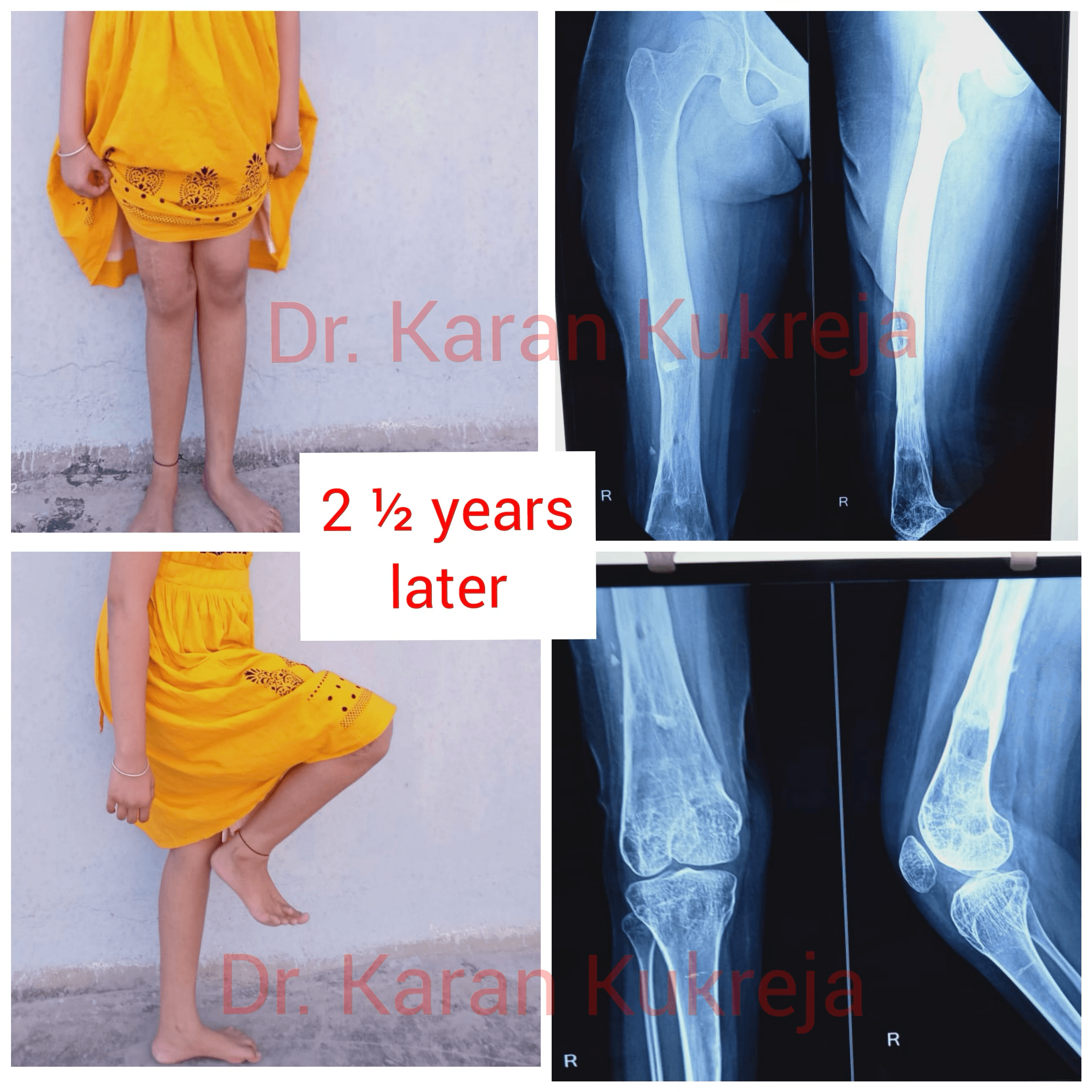
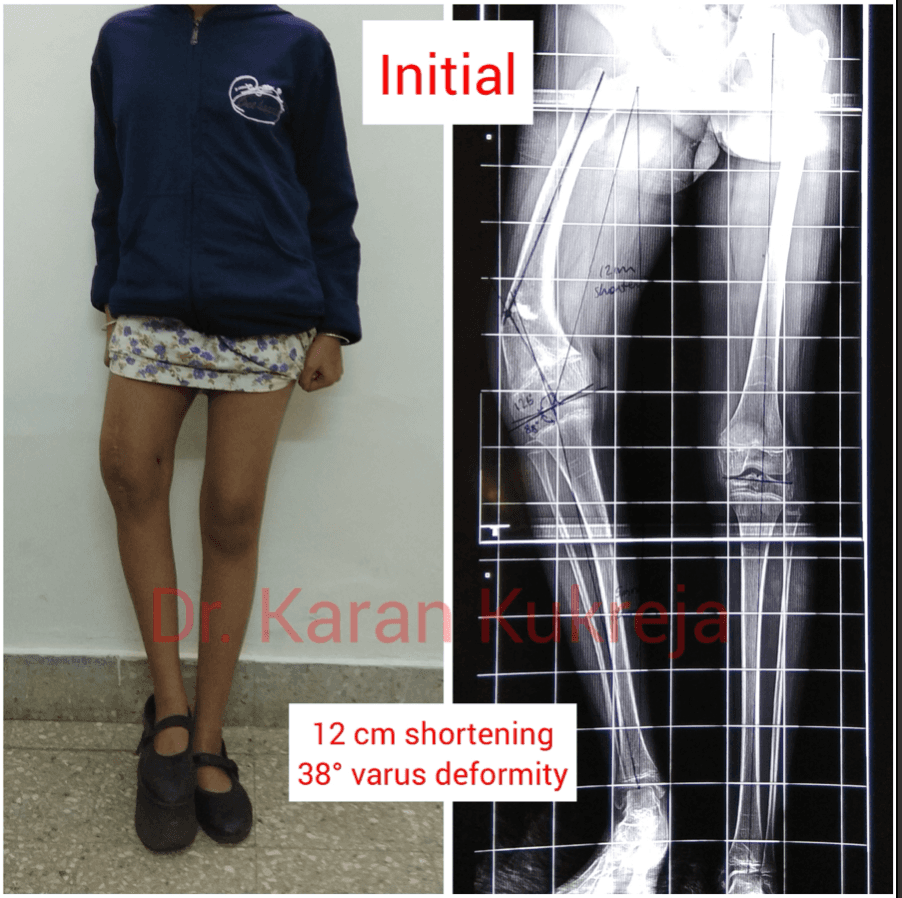
Case study 1: Complex deformity of femur

Case study 1: Complex deformity of femur

Case study 1: Complex deformity of femur

Condition:

12-year-old girl with growth arrest of the right femur due to childhood infection, causing 38° deformity and 12 cm shortening, leading to difficulty walking even with a shoe raise.

Diagnosis:

Post-infective growth arrest of the femur with severe deformity and limb length discrepancy.

Treatment Summary:

Deformity correction and limb lengthening performed using the Ilizarov technique.

Outcome:

Restored limb function, improved walking ability, and enhanced cosmetic appearance.
Case study 2: Computer assisted deformity correction

Case study 2: Computer assisted deformity correction

Case study 2: Computer assisted deformity correction

Condition:

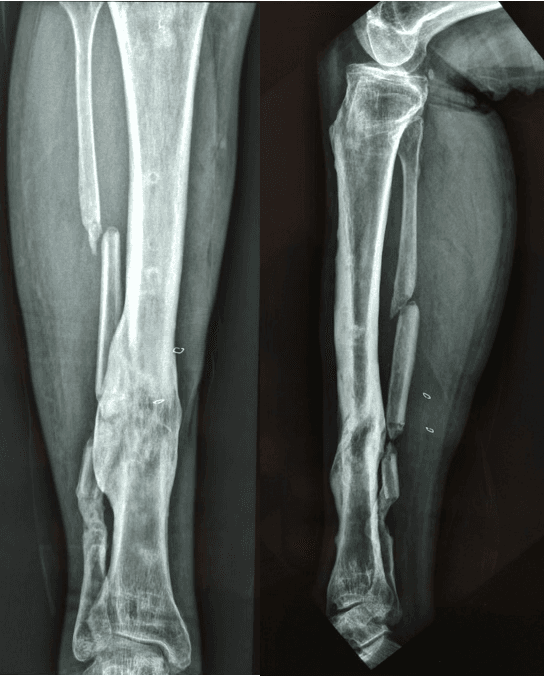
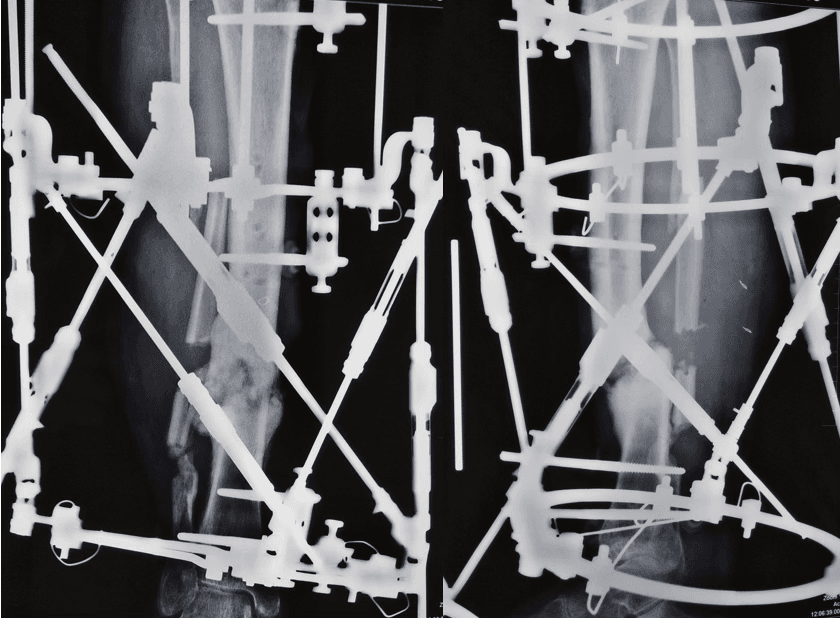
33-year-old male with persistent non-union and complex deformity (angulation, translation, rotational deformity, and shortening) following multiple surgeries for an open fracture with skin and bone loss.

Diagnosis:

Chronic non-union with multi-planar deformity after open fracture.

Treatment Summary:

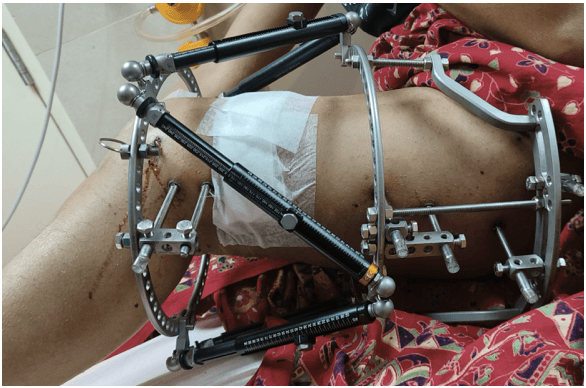
Underwent computer-assisted 6-axis deformity correction, enabling gradual and simultaneous correction in all three planes along with bone union.

Outcome:

Achieved complete deformity correction and bone healing without the need for extensive open surgery.

Pic 4 is another example of computerized deformity correction in femur. The hexapod fixator was used in this patient.
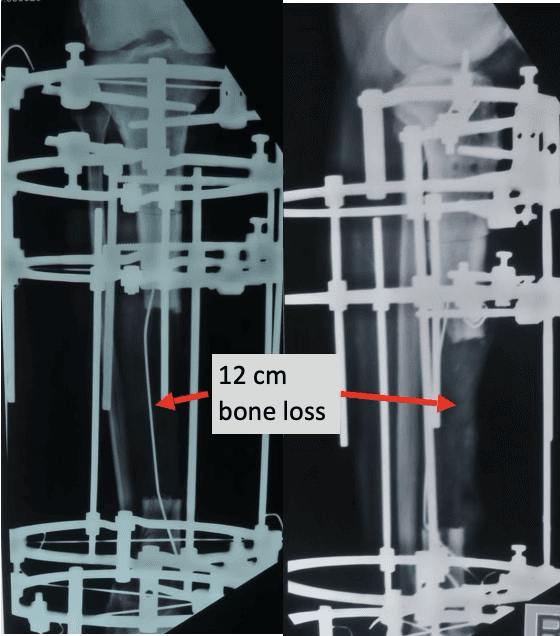
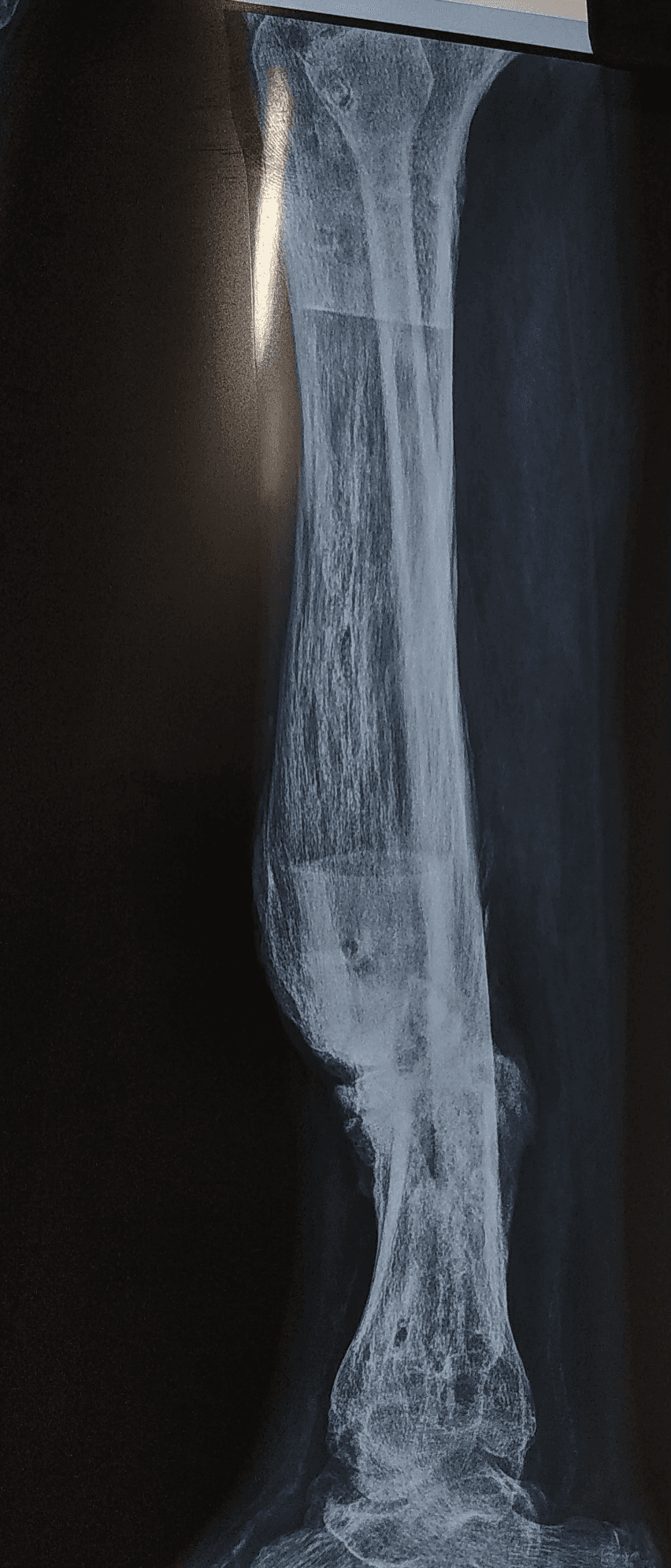
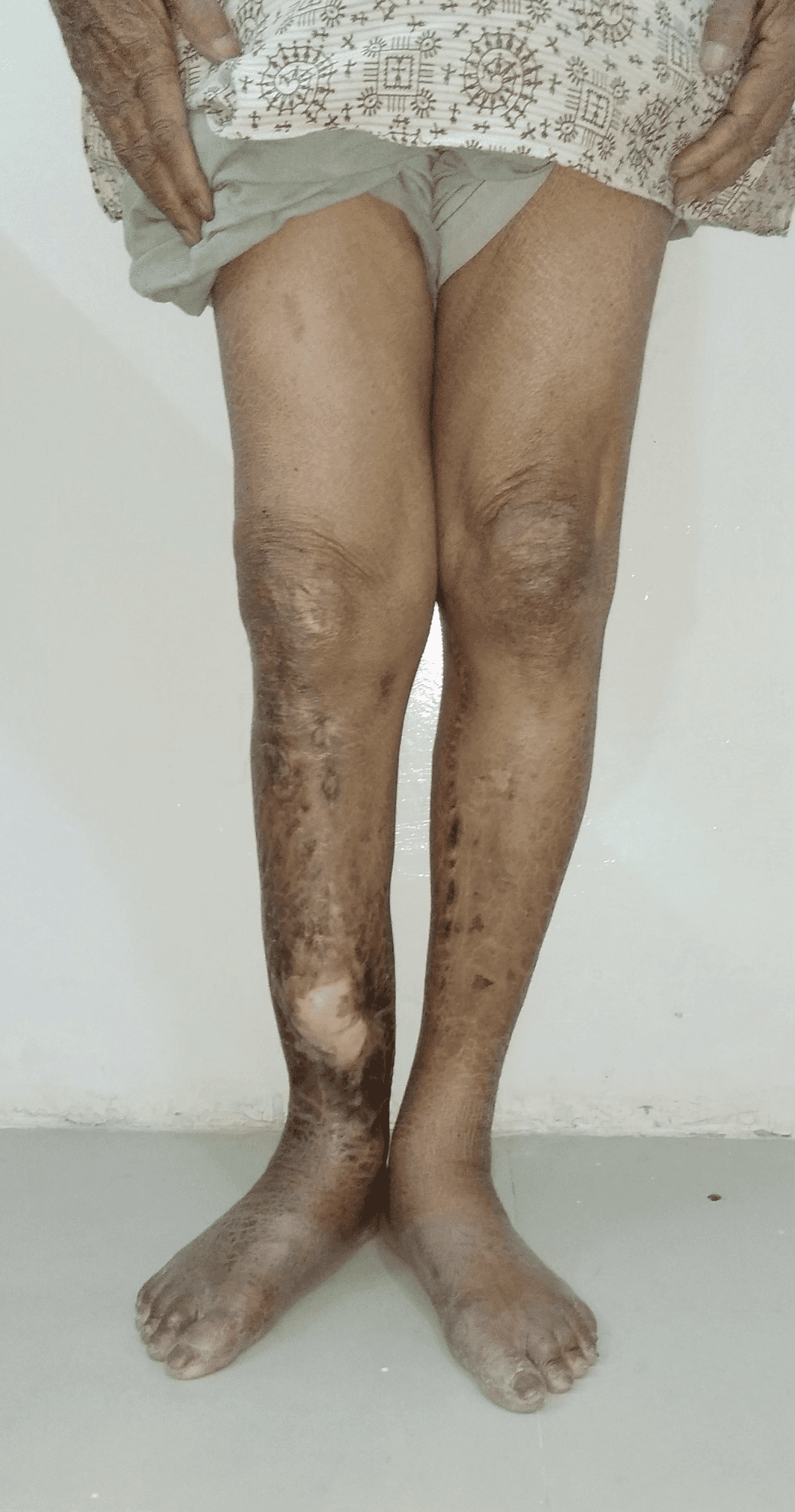
Case study 3: Infected Non-union with 12 cm Bone Loss in a 67-Year-Old Male

Case study 3: Infected Non-union with 12 cm Bone Loss in a 67-Year-Old Male

Case study 3: Infected Non-union with 12 cm Bone Loss in a 67-Year-Old Male

Condition:

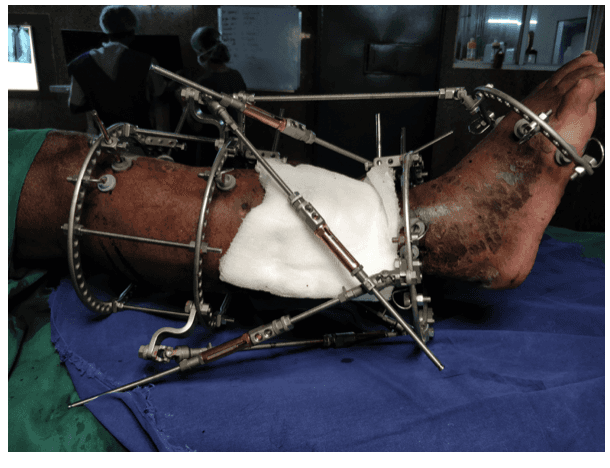
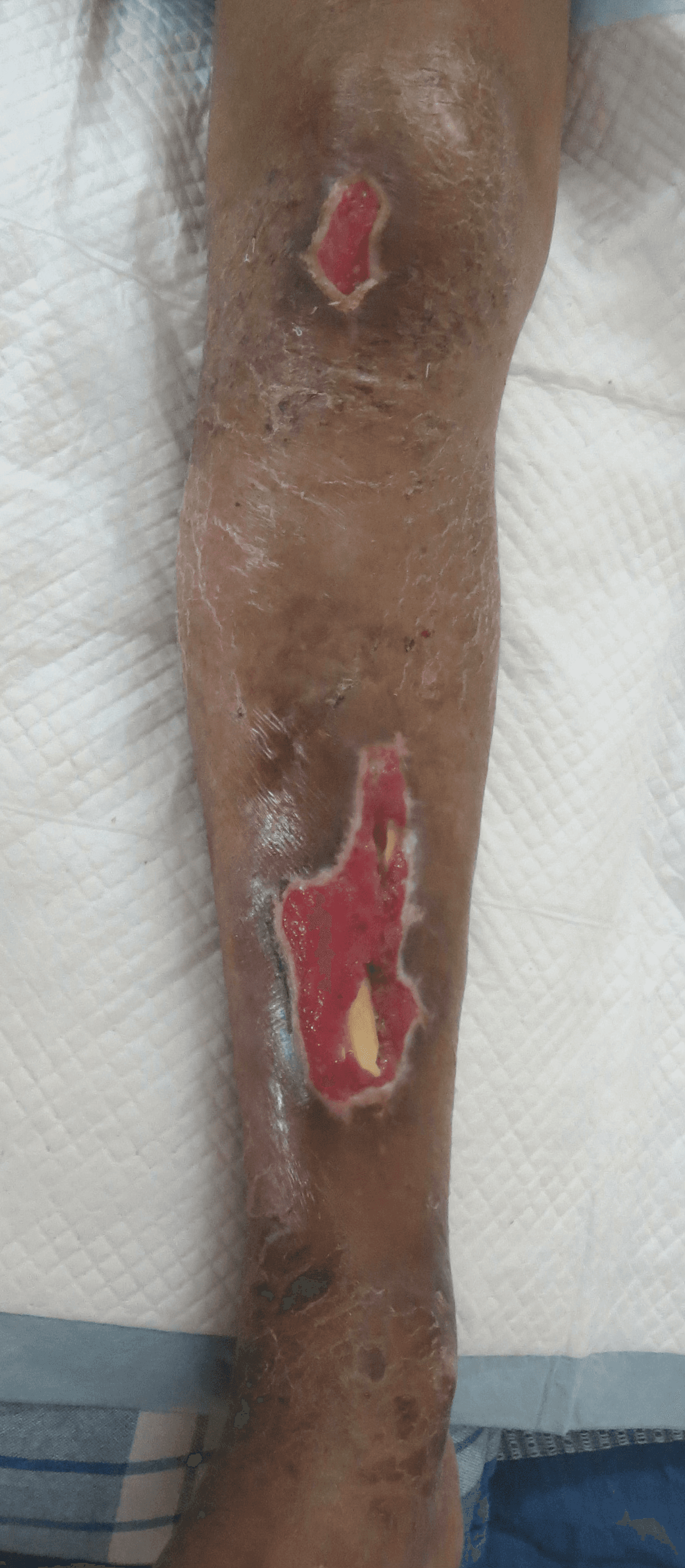
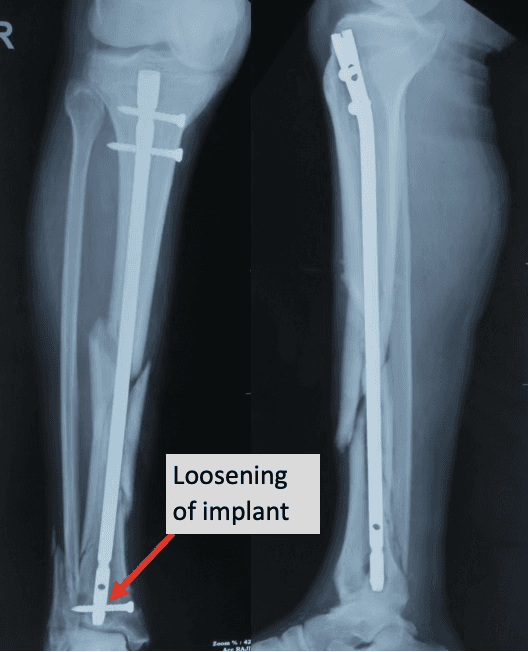
A 67-year-old male with a severe infection and exposed bone following surgery for a leg fracture, resulting in an infected non-union. The patient was unable to walk.

Procedure:

Ilizarov external fixation for infected tibial non-union with 12 cm bone loss.

Duration of treatment:

18 months.

Outcome:

Restoration of limb function with the ability to walk long distances pain-free and without a limp. The patient successfully resumed pre-injury activities without significant restrictions.
Copyright© 2025. Dr. Karan kukreja. All Right Reserved.

Terms of Service

Privacy Policy

Copyright© 2025. Dr. Karan kukreja. All Right Reserved.

Terms of Service

Privacy Policy

Copyright© 2025. Dr. Karan kukreja. All Right Reserved.

Terms of Service

Privacy Policy